
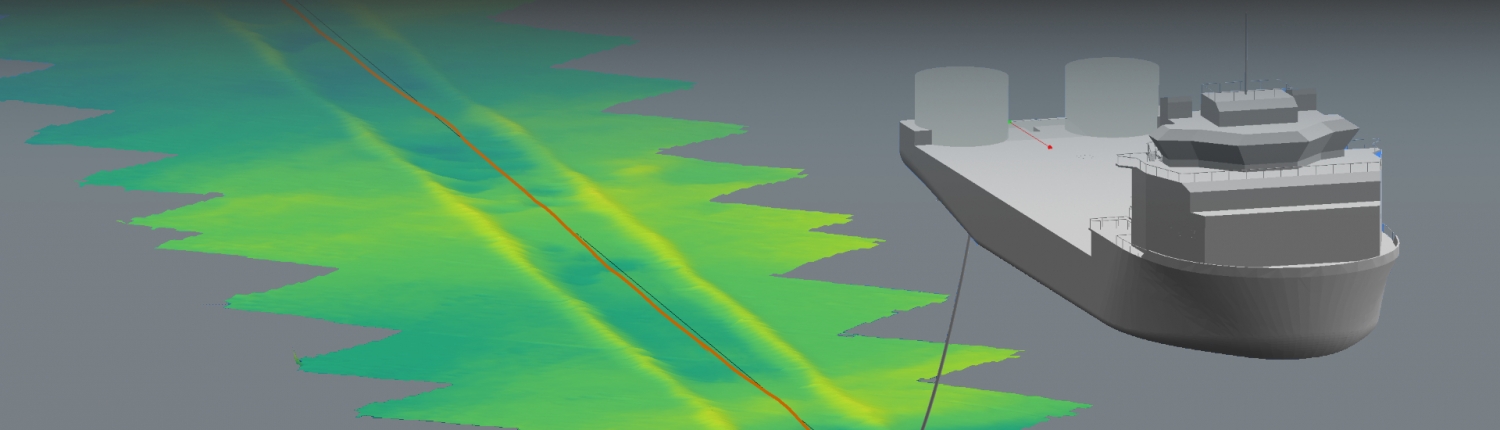
Automatic cable integrity and touchdown monitoring
OASYS Cable is the first subsea sonar system that is capable of automatic cable recognition. Our in-house developed data processing algorithms detect and log the geometry of the cable automatically.
We relieve the operator from the identification task: no ‘point & click’ required for the operator. The benefits are significant: the system is much faster and less sensitive to human errors and thereby reduces operational risks and costs.
Costs reduction
A key target in offshore wind farm development is reducing the operational costs. OASYS is built upon this principle:
- OASYS can be operated by a single operator covering a 12 hour shift;
- The system is vessel fixed and exceeds the cable lay vessel’s workability: no downtime due to currents;
- Lay speeds can increase as the installation crew feels more confident in the cable lay process;
- Captured data can be extracted instantly in as-built deliverable quality;
- The system provides time and equipment saving features such as instant cut calculations and post-lay survey capabilities.
Risk reduction
A significant part of the OWF development insurance claims is directly related to cable installation activities. OASYS has the following features that lower the operational risks:
- Cable detection is performed automatically and real time. This results in fewer human errors compared to the manual ‘point & click’ methods;
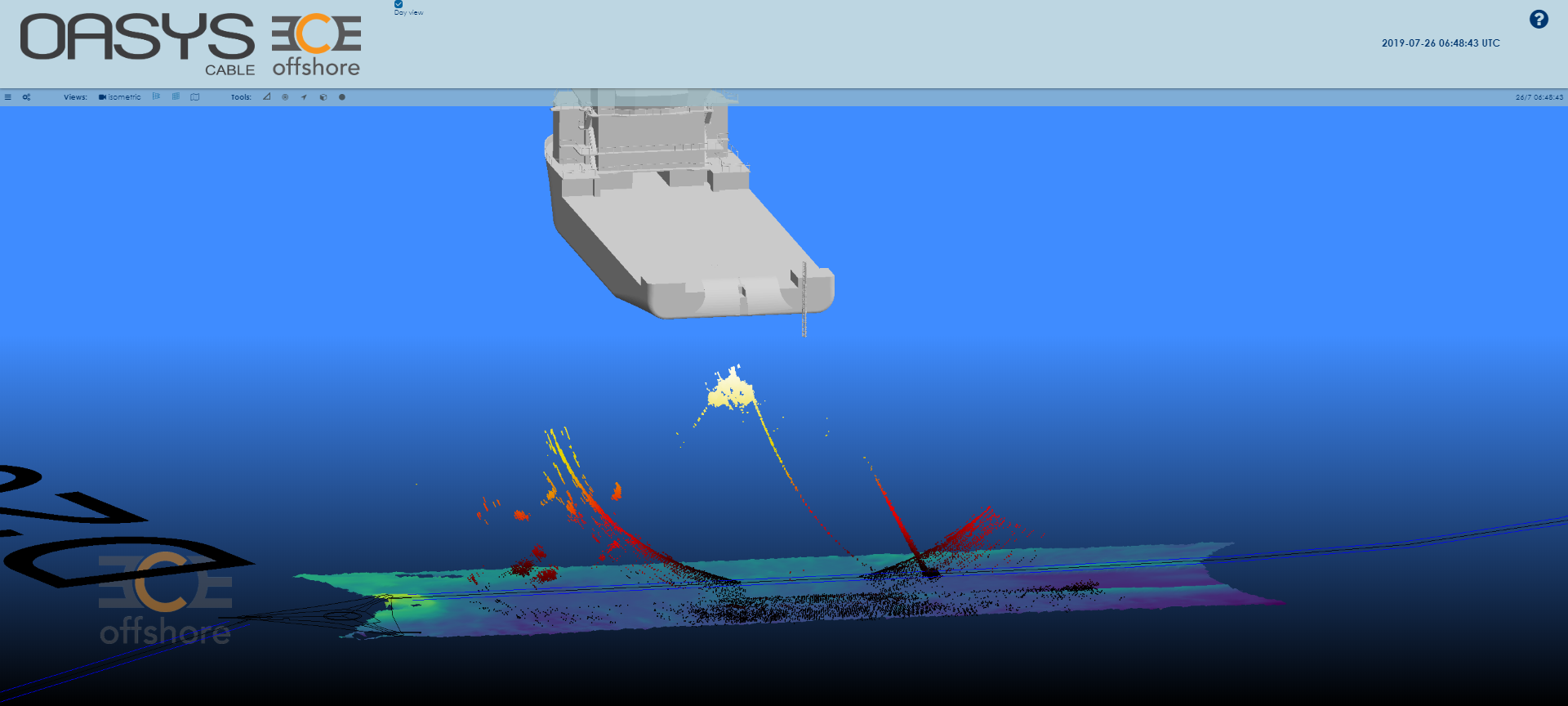
- The detection algorithm provides cable integrity values such as sagbend radius and tension levels automatically at 1-10Hz. Alarms can be raised if the measured integrity values approach pre-defined thresholds;
- Bathymetry and seabed features are visualised realtime. This provides the option to avoid obstacles or ensure that the cable is laid inside a trench;
- OASYS is a measurement based monitoring system, providing superior subsea positioning quality compared to model based systems.
172
CABLES MONITORED
99.2%
HARDWARE UPTIME
1
OPERATOR PER SHIFT
3
REPAIRS PREVENTED
21cm
MEAN OFFSET FROM AS-FOUND
86
INSTANT CUT CALCULATIONS

automatic
CATENARY DETECTION
The core of OASYS is the capability to perform object detection directly on acquired data.
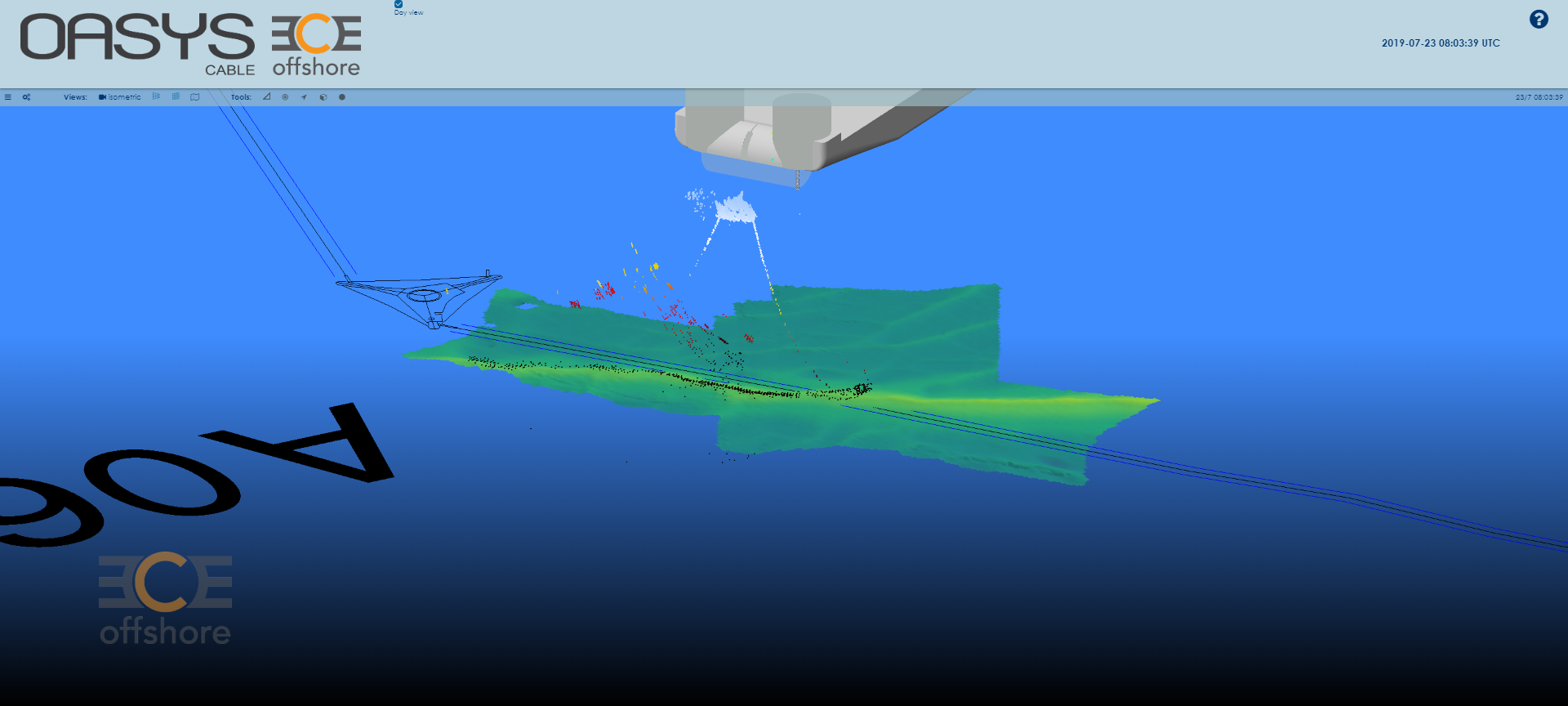
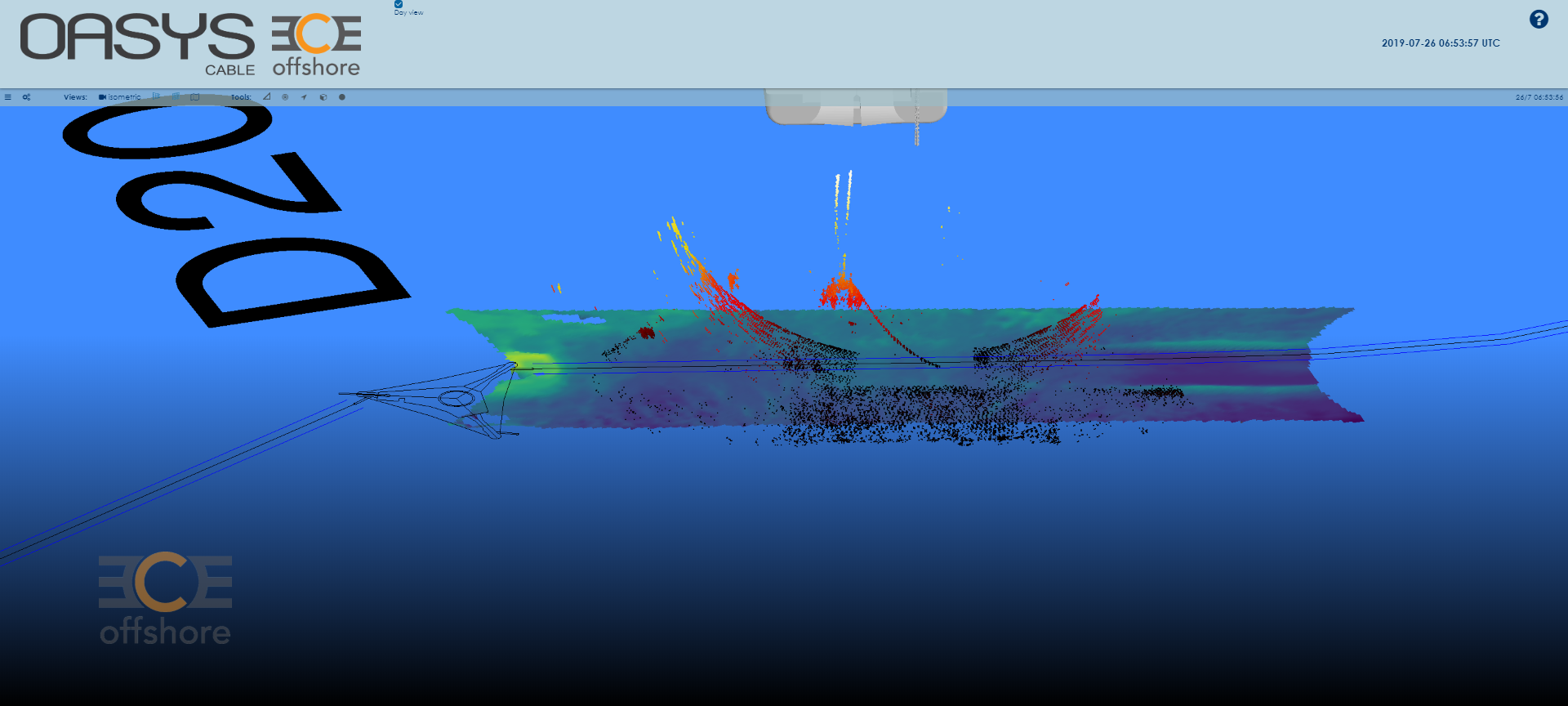
For cable laying operations, the cable’s acoustic reflections are processed and a catenary detection algorithm provides the cable geometry.
1
2
3
4
5
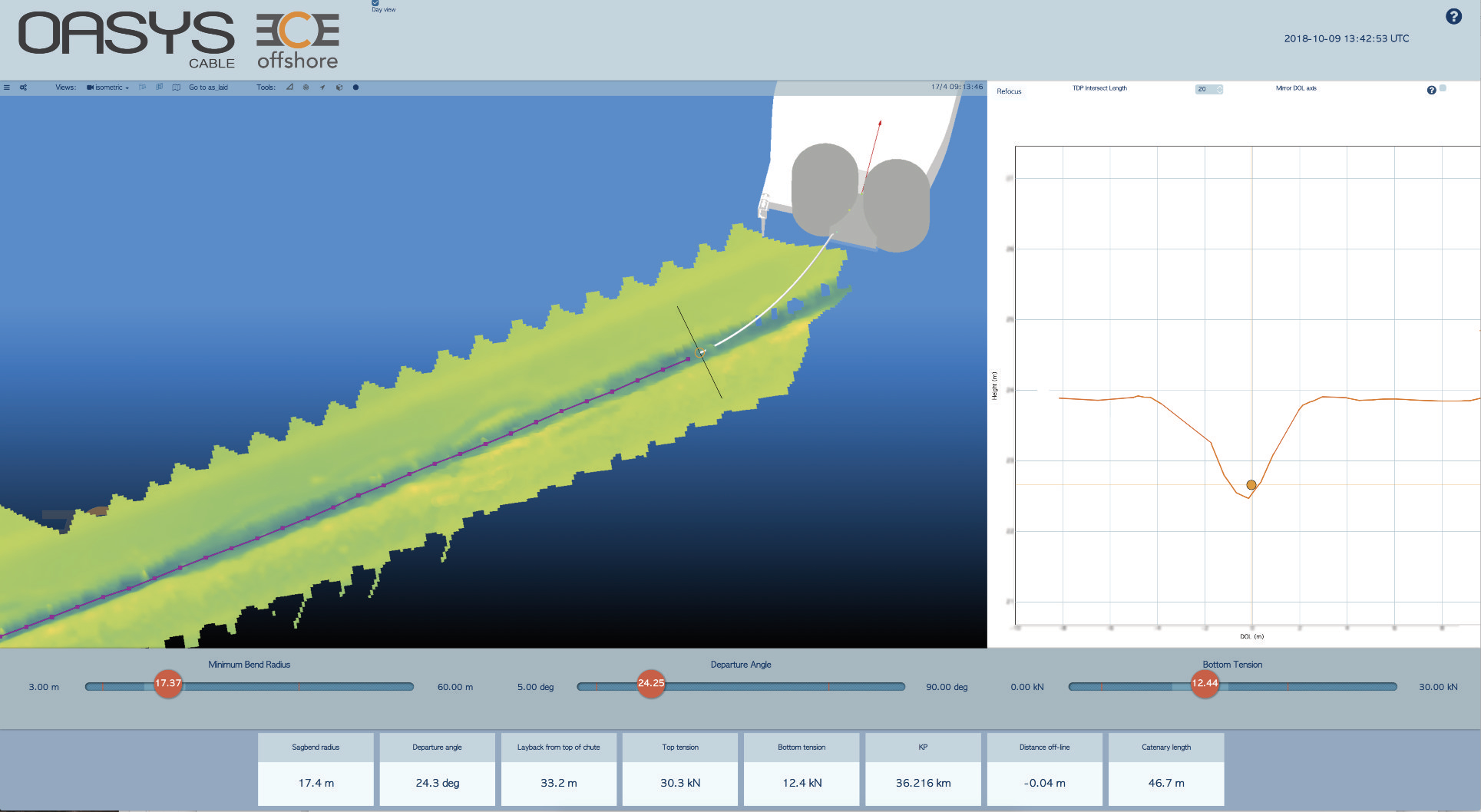
1
Automatically generated as-laid track
2
Seabed is scanned & meshed automatically
3
A cross-section of the seabed profile at touchdown point is visualised on the right side of the screen
4
The most important information is visualised using sliders. Alarms can be raised if the current value approaches a predefined threshold.
5
20-30m of seabed in front of the cable’s touchdown point is scanned. This allows for assessment of trench geometry or to identify boulders.
designed for
CABLE LAYING
All cable installation & integrity parameters are combined in a single web-interface.
Seabed, vessel and cable are visualised in a 3D environment or 2D map view.
Cable integrity values are displayed using sliders and info boxes. Determined values can be verified against threshold values to provide an early warning system
OASYS is database driven – all lay operations can be replayed at a later time for quality control or for operator training purposes
complete
OPERATIONAL CONTROL
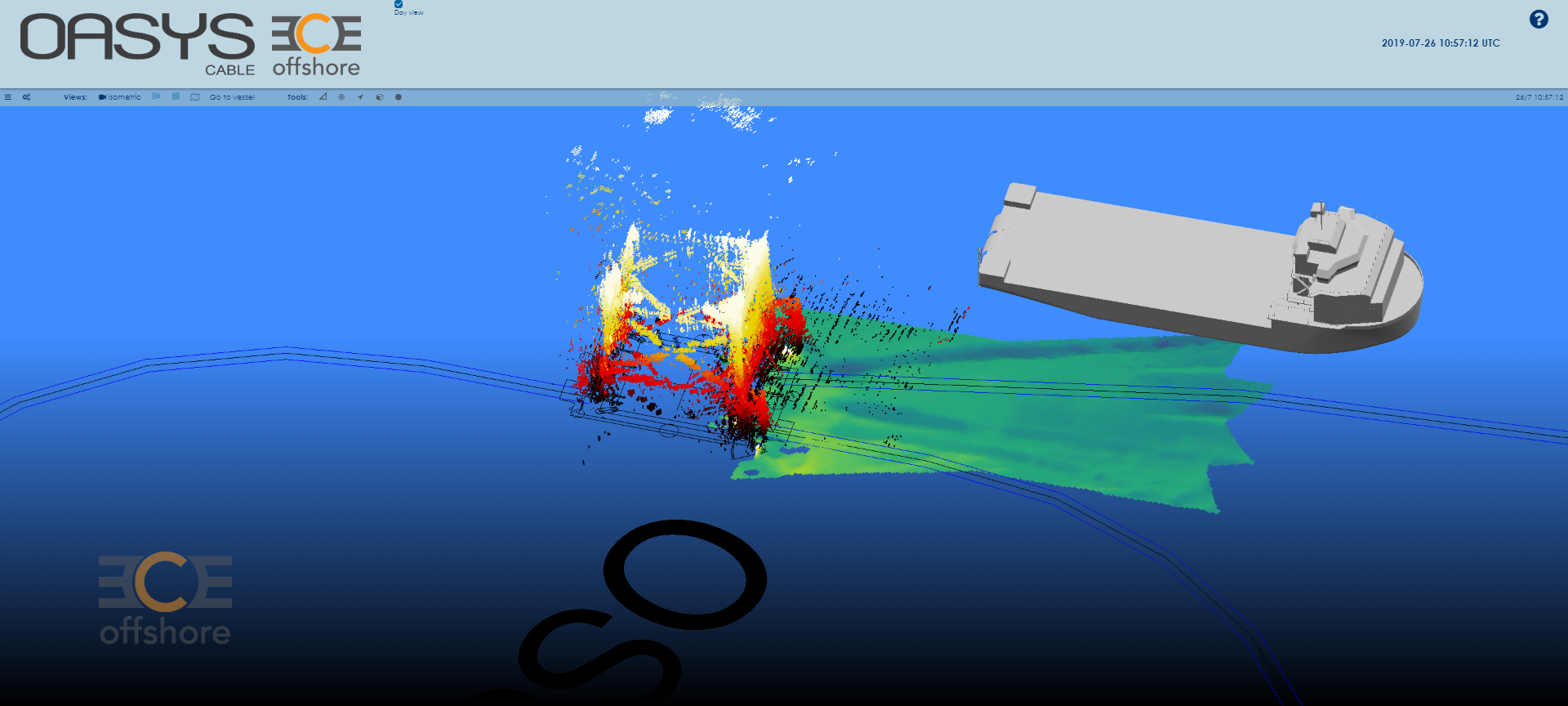
Use OASYS’ point-cloud data capabilities to visualise surrounding structures.
Monitor second-end pull-in operations by tracking the quadrant and suspended catenaries.
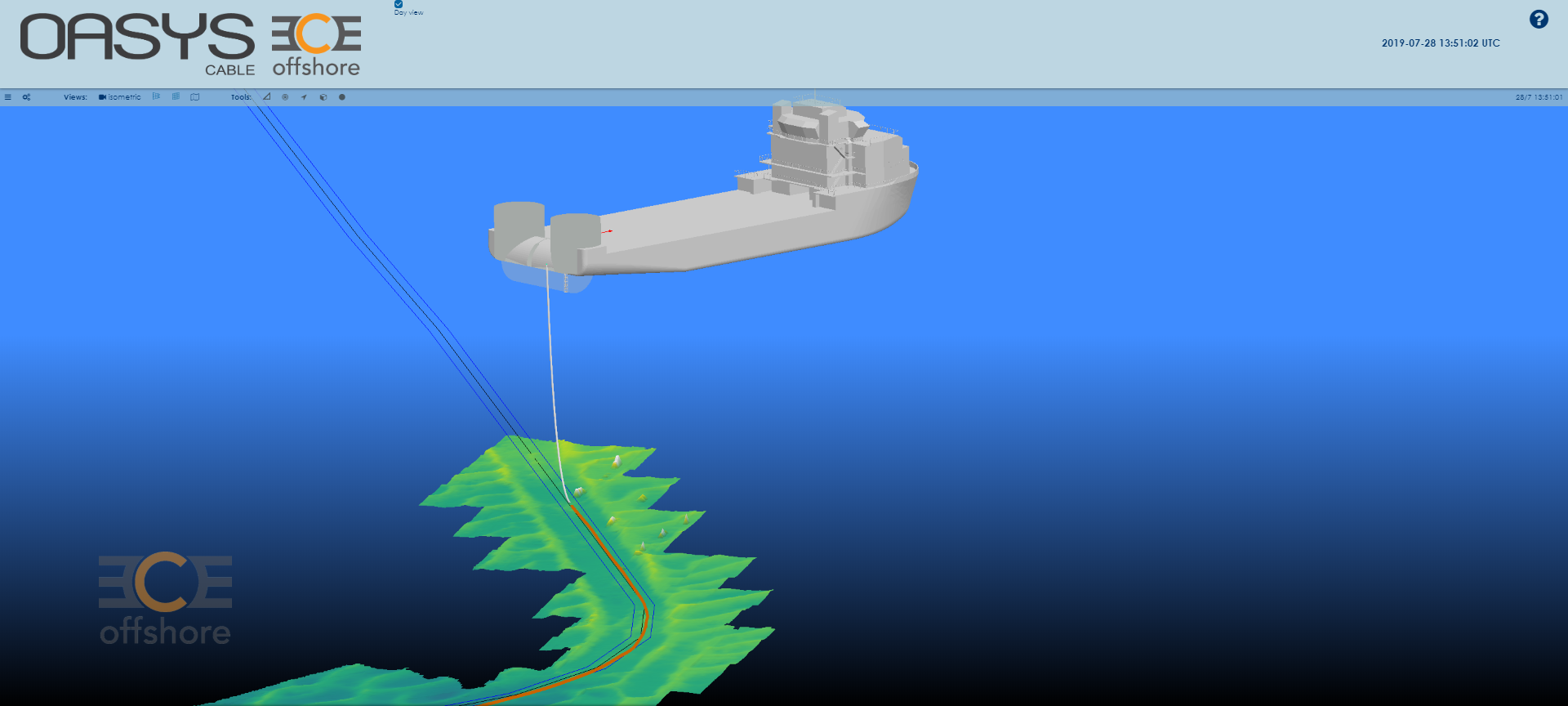
Accurately lay cables in curves using OASYS’ real-time visualisation of seabed and route position track.
unmatched
ACCURACY
Accurate object positioning requires high-resolution data. Therefore, OASYS uses 2D multibeam echosounders (MBES) with a large swath width (10° to 160°), sounding depth and resolution (0.45° x 0.9° at 450kHz) in order to obtain sufficient data quality at slant ranges up to 100m. The 2D MBES is mounted on our in-house developed pan-tilt rotator equipped with high-accuracy (0.001) rotational encoders continuously tilts the 2D MBES swath in the third dimension.
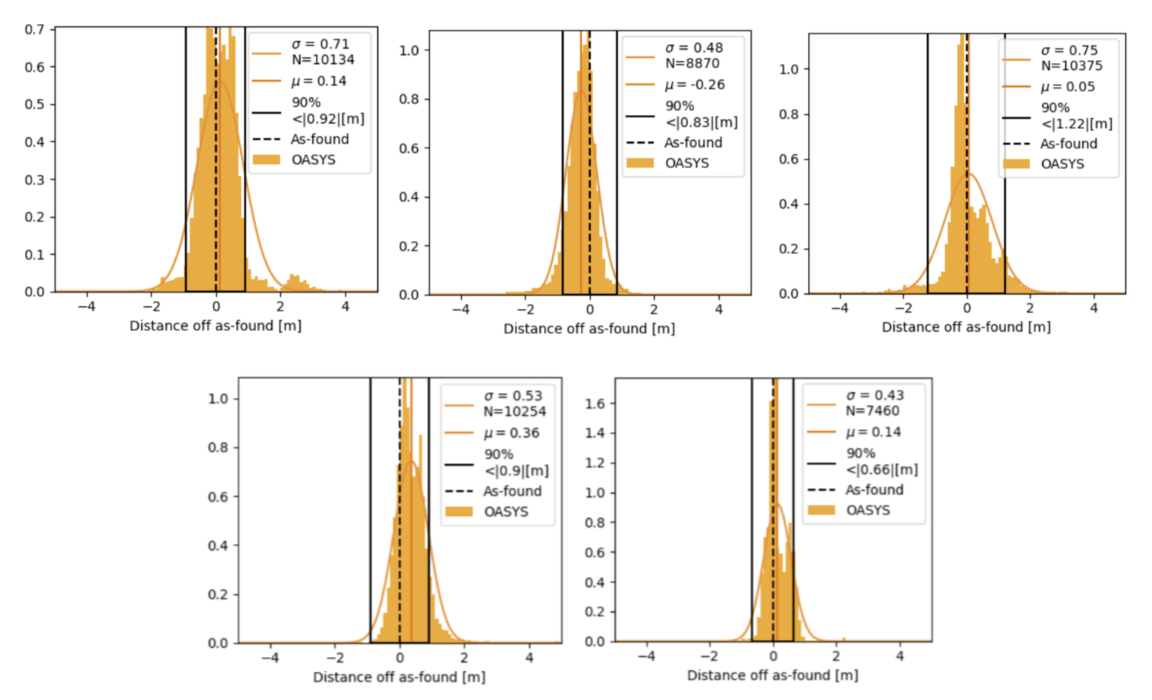
OASYS has been used to monitor over 150 export & array cable lay operations:
- Data from post-lay surveys was compared with OASYS as-laid tracks and found to match very well. OASYS’ mean as-laid offset from the as-found is on average 0.21m, which is equal to the typical cable diameter. Of all measurements, 90% fall within 1.09m from the as-found.
- Second-end cut mark calculations can be performed instantly. The obtained cut mark values always matched with ROV / beacon obtained values.
- OASYS performs very well at high seastates or strong current conditions. The system continued to monitor cable integrity at significant wave heights of 4.5m and accurately determined the touchdown point while the cable was subject to current conditions of 3.5 knots.
